

Why tuning out political speculation may help you stick to your financial plan
by Phil Clerkin on July 30, 2024
Inheritance Tax: The basics you need to know about the “death tax”
by Phil Clerkin on July 30, 2024
Guide: How an Olympic mindset could help you manage your finances effectively
by Phil Clerkin on July 12, 2024What makes an Olympian? Natural talent or the hours put into training might be the first things that come to mind. However, their approach and mindset play an important role in their achievements too.
An athlete’s mentality will have a huge effect on how they pursue goals and their ability to perform well when it matters most. Getting in the right frame of mind for success could mean the difference between making the Olympic team and missing out.
With Paris hosting the Olympics in 2024, now is the perfect time to look at what you could learn from Olympians when it comes to managing your finances effectively, such as:
- Being goal-oriented
- Breaking down your performance
- Keeping your emotions in check
- Working with professionals.
Download your copy of ‘How an Olympic mindset could help you manage your finances effectively’ to discover how you could benefit from adopting an Olympic mindset.
If you’d like to talk to us about your financial plan, please get in touch.
read more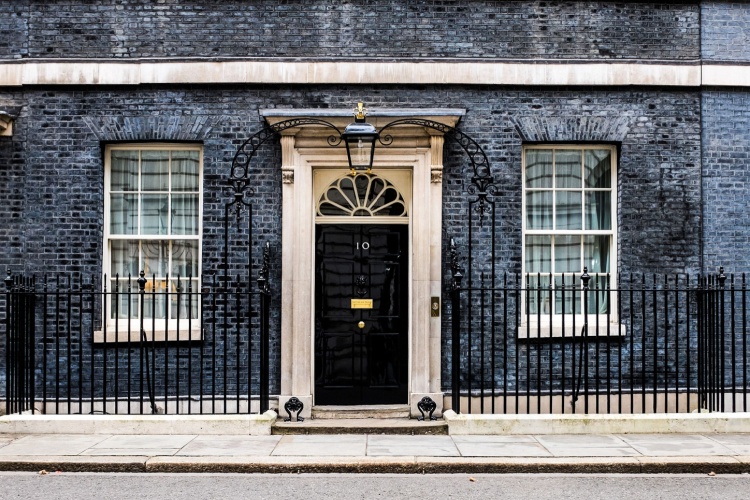
What a Labour government could mean for your finances
by Phil Clerkin on July 9, 2024In a decisive and historic victory, the Labour Party won the 2024 UK general election with a significant majority and Keir Starmer has become the UK prime minister after 14 years of Conservative government.
The new chancellor, Rachel Reeves, has already pledged to “fix the foundations” of the British economy in a bid to drive growth.
Read on to find out what a Labour government could mean for your finances.
National Insurance, Value Added Tax (VAT), and Income Tax set to remain the same
In their 2024 manifesto, Labour said they would not “increase taxes on working people, which is why we will not increase National Insurance, the basic, higher, or additional rates of Income Tax, or VAT”.
Despite this, millions of people seem likely to face a higher Income Tax burden over the next five years as a result of fiscal drag. The party are set to continue the Conservatives’ freeze of the Personal Allowance and the thresholds at which higher- and additional-rate Income Tax are charged.
Notably, the party has offered no assurances about Stamp Duty, Capital Gains Tax (CGT) and Inheritance Tax, other than ruling out applying CGT to primary residences. Consequently, there is the potential for reforms or tweaks to these in the administration’s first Budget.
Indeed, Keir Starmer has already indicated that he will let the temporary increase in the Stamp Duty threshold for first-time buyers return to its previous level of £300,000 in April 2025 (it is currently £425,000).
What Labour are likely to do in the first Budget is to address what it calls “unfairness” in the tax system, and these could be some of the measures Rachel Reeves presents:
- Abolishing non-dom status and replacing it with a modern scheme for people genuinely in the country for a short period.
- Ending the use of offshore trusts to avoid IHT.
- Ending private schools’ VAT exemption and business rate relief. They plan to use this additional tax revenue to train more teachers, citing an estimated shortage of 6,000.
With Labour keen to increase investment in the UK economy, Jeremy Hunt’s proposal for a “UK Individual Savings Account (ISA)” could potentially make an appearance in the Budget too.
Maintaining the State Pension triple lock, and a likely “pensions review”
Labour has committed to keeping the State Pension triple lock in place.
The triple lock ensures that the State Pension rises each year by the highest of:
- Inflation, as measured by the Consumer Prices Index (CPI) in the September of the previous year
- Average increase in wages across the UK
- 2.5%.
The commitment means that the policy is likely to stay in place until at least 2030 at least.
During the election campaign, Labour also confirmed that, in a change from their previous stance, they have no plans to reintroduce the pension Lifetime Allowance (LTA).
The LTA capped the amount you could hold in your pensions without paying an additional tax charge when you accessed the funds. Chancellor Jeremy Hunt removed the additional LTA tax charge in April 2023, before abolishing the LTA altogether in April 2024.
Labour has said it will not reintroduce the charge to provide certainty for savers, and because they say it would be too complex to bring back the former rules.
On private pensions, the party has been more vague, promising reform after a review is conducted into the current system. Labour could well announce this review in the next few weeks – perhaps even in the first King’s Speech.
While Labour hasn’t outlined a detailed vision for change, its manifesto said the new system would be centred around delivering “better outcomes” for savers and retirees, as well as bolstering “security in retirement”.
This means there could be reforms further down the line, although these are unlikely to take place before the start of the 2025/26 tax year at the earliest, depending on the scope of the review.
Labour have said that they will act to increase investment from pension funds in UK markets.
The party plans to adopt reforms that “will ensure that workplace pension schemes take advantage of consolidation and scale, to deliver better returns for UK savers and greater productive investment for UK PLC”.
Interest rates set to fall, and ambitious housebuilding targets
One piece of good fortune the new Labour government will benefit from is that there will likely be a cut in interest rates within their first few weeks of office.
With inflation having finally reached the Bank of England (BoE) target of 2%, the BoE is predicted to cut interest rates at its next policy meeting in August. That will likely reduce the cost of your personal and business borrowing if you’re on a tracker- or variable-rate deal.
While you won’t immediately benefit from any cut if you’re on a fixed-rate mortgage, this could help you secure a cheaper deal when you come to next take out a home loan.
To tackle a property shortage, Labour has pledged to ensure that 1.5 million homes are built over the next five years.
The party wants to allow local authorities to earmark more green belt land for homes, while other planning policies the new government have outlined include:
- Reintroducing mandatory local housing targets scrapped by the Conservatives
- Funding additional council planning officers
- Reviewing green belt boundaries to prioritise brownfield and “grey belt” land to meet housebuilding targets
- Publishing new design codes, to try to raise the quality of the properties built.
One key pillar of the Labour manifesto was to help more young people onto the property ladder.
They say that they want to “give young people first dibs” on new housing developments and introduce a permanent Freedom to Buy mortgage guarantee scheme.
This permanent mortgage guarantee scheme will help prospective homeowners who struggle to save for a large deposit. Labour says their plans would support 80,000 young people to get on the housing ladder over the next five years.
Enhancing employee rights and the minimum wage could affect your business
If you own or run a business, Labour has confirmed a “new deal for working people” and says it will introduce legislation within the first 100 days of office. These plans include:
- Banning zero-hours contracts
- Ending “fire and rehire”
- Introducing parental leave, sick pay, and unfair dismissal rights from day one.
Labour also intends to reform the minimum wage, so it becomes a “genuine living wage”. Additionally, they plan to remove the age bands, so every adult is entitled to the same rate of minimum wage – potentially pushing up your salary costs if you employ under 21-year-olds. Note that there has been no clarification on whether an “adult” includes over-16s or over-18s.
An Autumn Budget?
The first significant date in the new government’s calendar will be the King’s Speech on 17 July. This will set out the next government’s legislative agenda and is when you’ll find out exactly what the new administration’s policy priorities are for the coming year.
Labour has previously said it would not deliver a Budget without forecasts from the Office for Budget Responsibility (OBR). Considering that it takes around 10 weeks for the OBR to assess the economic impact of policy announcements and produce a report, the earliest that the Budget could take place would be mid-September.
However, the Labour Party Conference will take place from 22 to 25 September, with the Conservative conference following between 29 September and 2 October.
Consequently, an October or November date is perhaps more realistic for the party’s first Budget. Rachel Reeves has confirmed she will set the date before the summer parliamentary recess.
Labour has also committed to one major fiscal event a year, giving families and businesses due warning of tax and spending policies.
It seems likely that, whatever reforms the party announce in their Autumn Budget, the timetable means that these will come into force at the start of the 2025/26 tax year. This should give you the opportunity to plan ahead of any proposed changes.
Markets have historically reacted positively to a change of government
With the likely result of the election already priced into markets, there was little movement in the FTSE 100 as news of Labour’s victory filtered through. The pound was largely unchanged against the dollar.
However, research by AJ Bell suggests that a change of government can be positive news for markets.
On average, the FTSE All-Share has recorded a double-digit percentage gain in the first year after an election result where one prime minister is ejected from office. There are also greater average gains when a government changes relative to when it remains the same.
Markets tend to dislike uncertainty, so a decisive election result could lead to a period of financial stability that may spark renewed investor interest in the UK.
Moreover, if Labour’s pension review leads to greater investment in UK companies, this could further enhance the attractiveness of UK equities.
Get in touch
If you have any questions about how the Labour administration could affect your finances, please get in touch.
The content of this article is intended for general information purposes only. The content should not be relied upon in its entirety and shall not be deemed to be or constitute advice.
Information is taken from the Labour Party manifesto.
read more
3 fun ways you can pass on essential money lessons to children
by Phil Clerkin on June 28, 2024As a parent or grandparent, you want the young children in your life to grow up to be happy and successful adults. A solid grasp of finances could set them off on the right track when they get older, but alarmingly, many children don’t receive any lessons on the subject during their formal education.
A Nationwide survey found that 84% of parents say their children haven’t received any financial education at school despite 96% believing it’s important for young people to learn about money.
In light of data such as this, it might be prudent to take on some of the responsibility and start educating your children or grandchildren about personal finances yourself.
Making the experience as enjoyable as possible could help to engage kids in money conversations. So, read on for three fun ways to pass on essential finance lessons to children as they grow up.
1. Use games to teach kids about money in an interactive way
According to a report from UNICEF, play is one of the most important ways in which young children gain essential knowledge and skills. So, integrating financial lessons into playtime through games could be an effective way to teach them about money.
Games let kids role-play everyday financial scenarios and learn money fundamentals without any risk.
There are several fun games you can play with young children using items you have at home:
- The desert island game – get your children or grandchildren to imagine they’re stranded on a desert island and can only bring six items. Through discussing their options, they’ll soon realise it’s sensible to prioritise essentials over fun items when they have limited choice, giving them an introduction to the basics of budgeting.
- Setting up shop – encourage your child to set up a shop selling household objects. Can they set accurate prices and give correct change? Next, flip the game and let them be the customer. Can they buy everything they need without going over budget?
Alternatively, there’s a plethora of fun financial board games you can buy for kids of all ages:
- Money Bags – in this game for ages five and above, players learn to recognise coins and develop their maths skills by completing chores and earning money as they move around the board.
- Pay Day – suitable for children aged eight and older, Pay Day simulates something most people are familiar with – the monthly payday cycle. Players must ensure their pay packet lasts the month and whoever has the most at the end of day 31 wins.
- The Game of Life – this classic board game takes players through an entire lifetime. It can teach children the financial implications of saving, further education, retiring and more, all in a family-friendly package.
The best money games reward kids for making decisions that would also benefit them in the real world, teaching them valuable lessons in a fun, interactive way. Playing these games is also a lovely chance for quality time together, so it’s a win-win all around.
2. Let them be in charge of money on a day out
As your children or grandchildren grow up, it’s important that they begin to understand the value of money.
While you will no doubt enjoy treating your loved ones, it can be hard for children to grasp how far money goes when adults buy things for them. Finding interesting ways for youngsters to practise spending money helps them understand exactly how much items and activities cost.
One fun way to do this is to let them be in charge of the family budget on a day out.
For example, say you’re visiting a castle. Before you arrive, give them £100 and explain that this money must pay for everything you do that day.
When you arrive, they’ll have to pay for entry. This might leave them with, say, £50.
After exploring the castle, your child might be tempted to buy something from the gift shop. However, if they buy a toy or book, they might not have enough money to pay for lunch.
They’ll need to carefully consider what’s more important. Hopefully, they’ll realise that food takes priority over souvenirs. If not, they’ll have to face the consequences of their actions and skip lunch.
Perhaps it would be wise to have backup sandwiches in the car to avoid any tantrums on the way home!
3. Books are a fun way to learn for kids of all ages
If your grandchild loves story time, or your bleary-eyed teenager stays up reading until the early hours, you could introduce them to books about money.
You might think personal finance is too dry a topic for children’s literature, but there’s an excellent range of entertaining books on the subject for children of all ages.
The Four Money Bears by Mac Gardner is a wonderful option for younger children.
Through beautiful illustrations and accessible storytelling, Gardner uses the tale of Spender Bear, Saver Bear, Investor Bear, and Giver Bear to teach kids about the functions of money and instil lessons such as spending cautiously, saving diligently, investing wisely, and giving generously.
For kids aged 8 to 12, Finance 101 for Kids: Money Lessons Children Cannot Afford to Miss by Walter Andal is a fun-to-read crash course on essential topics like earning, saving, investing, and credit. It even touches on more advanced subjects like the stock market, foreign exchanges, and basic economics.
Reality TV-loving teenagers might enjoy Deborah Meaden Talks Money. This insightful book from entrepreneur and TV personality Deborah Meaden features podcast-style interviews with stars including Gary Neville, Sophie Ellis-Bextor, and Joe Lycett. It’s designed to demystify the world of finance and help your children build good money habits in an exciting, relatable way.
Teaching your children and grandchildren about money may seem like a challenge now, but when they reach adulthood, all your patience and effort should pay off. You never know, you may even get a belated thank you!
Contact us to support your children in other ways
Sharing financial knowledge with children is important, but there are other ways you can support their financial future.
We can help you craft a financial plan that supports your children or grandchildren, laying the foundations for the next generation. Contact us to arrange a meeting.
Please note:
This blog is for general information only and does not constitute advice. The information is aimed at retail clients only.
read more
Higher-rate taxpayers: Beware of the 60% tax trap
by Phil Clerkin on June 28, 2024The tapering of the Personal Allowance means some higher-rate taxpayers effectively pay an Income Tax rate of 60%, sometimes without realising. Fortunately, if you’re affected, there could be ways to reduce your tax bill.
A report in the Telegraph suggests 1.35 million workers were affected by the 60% tax trap in 2023/24. Collectively, they paid an extra £4.7 billion to the Treasury. Read on to find out if you could unwittingly be paying a higher rate of Income Tax than you expect.
The tax trap affects those earning more than £100,000
You might think the highest rate of Income Tax is 45%, and officially you’d be correct. Most people pay the standard rates of Income Tax. In 2024/25, Income Tax rates and bands are:

Please note, that different Income Tax bands and rates apply in Scotland.
However, the Personal Allowance is reduced by £1 for every £2 you earn over £100,000. If you earn more than £125,140, you don’t have a Personal Allowance and pay tax on all your income.
For example, if you earn £101,000, on the £1,000 above the threshold, you’d pay £400 of Income Tax at the higher rate. In addition, you’d lose £500 of your Personal Allowance, so this portion of your income would also be subject to Income Tax at 40%, adding up to £200.
So, out of the £1,000 you’ve earned above the tapered Personal Allowance threshold, you’d only take home £400 – a 60% effective tax rate. It’s led to the tapering being dubbed a “stealth tax” in the media.
Further compounding the issue is the fact that the Personal Allowance and Income Tax bands are frozen until 2028.
While the thresholds are frozen, many people are likely to receive wage increases. As a result, more people are expected to be caught in the 60% tax trap in the coming years.
Don’t forget your salary might not be your only income that’s considered when calculating your Income Tax bill. For example, you could be liable for interest earned on savings that aren’t held in a tax-efficient wrapper.
Contact us if you’re unsure which of your assets could be liable for Income Tax.
3 legal ways to avoid falling into the 60% tax trap
If you’re affected by the tapered Personal Allowance, thinking about how you structure your earnings may provide an opportunity to reduce how much you’re giving to the taxman. Here are three excellent options you might want to consider.
1. Boost your pension contributions
One of the simplest ways to avoid paying 60% tax if you could be affected is to increase your pension contributions.
Your taxable income is calculated after pension contributions have been deducted. As a result, boosting pension contributions could be used to reduce your adjusted net income so you retain the full Personal Allowance or reduce the proportion you lose.
Increasing pension contributions could help you secure a more comfortable retirement too. However, keep in mind that you cannot usually access your pension savings until you’re 55 (rising to 57 in 2028).
2. Use a salary sacrifice scheme
If your workplace has a salary sacrifice scheme, it could also provide a useful way to reduce your overall tax liability.
Salary sacrifice enables you to exchange a part of your salary for non-cash benefits from your employer. This could include higher pension contributions, childcare vouchers, or the ability to lease a car.
By essentially giving up part of your income, you might be able to bring your taxable income below the threshold for the tapered Personal Allowance.
You should note that salary sacrifice options vary between employers, so it may be worthwhile to check your employee handbook to see if any options could suit you.
3. Make charitable donations from your income
If you’d like to reduce your Income Tax bill and support good causes, you could make a charitable donation. Again, by deducting donations from your salary before tax is calculated, you could manage how much of the Personal Allowance you lose.
Contact us to talk about how to manage your tax bill effectively
There may be other steps you could take to reduce your overall tax bill. A tailored financial plan will consider your tax liabilities, including from other sources, such as your savings and investments, to highlight potential ways to cut the amount you pay to the taxman.
If you’d like to arrange a meeting, please get in touch.
Please note:
This blog is for general information only and does not constitute advice. The information is aimed at retail clients only.
Please do not act based on anything you might read in this article. All contents are based on our understanding of HMRC legislation, which is subject to change.
A pension is a long-term investment not normally accessible until 55 (57 from April 2028). The fund value may fluctuate and can go down, which would have an impact on the level of pension benefits available. Past performance is not a reliable indicator of future performance.
The tax implications of pension withdrawals will be based on your individual circumstances. Thresholds, percentage rates, and tax legislation may change in subsequent Finance Acts.
read more
The fantastic benefits of basing your financial plan on happiness
by Phil Clerkin on June 28, 2024When you think about what you want the future to look like, it’s probably not the value of your assets that comes to mind first. Instead, you might think about the experiences you want or the wellbeing of your loved ones
Yet, to build the life you want, money is usually an important factor. While you often hear that “money can’t buy happiness”, the reality is that your financial circumstances are likely to play a role in whether you can secure the lifestyle you want.
By making your financial plan as much about happiness as your wealth, you could work towards your long-term goals and improve your overall wellbeing.
Combining your financial goals and happiness could improve your wellbeing
There are several excellent reasons to consider both your wealth and happiness when creating a financial plan.
First, financial stress can be detrimental to your wellbeing.
According to findings from the National Debtline, almost half of people in the UK were worried about money at the start of 2024 – the equivalent of 24.9 million people. Only 12% of people said they were not at all worried and felt able to cope financially.
Indeed, a report from Aegon found even among top earners, 1 in 3 people worried about their finances. So, taking control of your finances could improve your overall mental wellbeing.
In addition, it could focus on how you use your wealth to deliver outcomes that boost your happiness over the long term.
Rather than focusing simply on wealth creation, a financial plan would consider what steps you need to take to be able to reach your goals.
For example, after reviewing your finances, you might decide to reduce your working hours to phase into retirement sooner than expected. While that could mean the value of your pension is lower than if you continued to work, the free time you’d gain could be far more valuable. You might use the freedom to spend more time with your grandchildren or indulge in a hobby that brings you joy.
Making happiness a key part of your financial plan may allow you to make decisions that balance getting more out of your life with financial security.
3 valuable ways making happiness part of your financial plan could improve it
1. It gives you a chance to define what makes you happy
While you might work hard to build a fulfilling life, when was the last time you really considered what makes you happy?
According to the Financial Wellbeing Index from Aegon, just 1 in 4 people are very aware of the day-to-day experiences that give them joy and purpose in life. Similarly, only 1 in 4 people have a concrete vision of the things and experiences their future self might want.
This disconnect could mean some people are making decisions that don’t align with the future they picture for themselves.
By basing your financial plan on happiness, it provides an opportunity to set out what could improve your wellbeing now and in the future.
2. It could enhance your motivation to follow a long-term plan
Sticking to a financial plan over a long period can be difficult. However, knowing that your efforts will help you create the life you want may improve your motivation and help you stay on track.
If you daydream about retiring early, having a financial plan that’s been tailored to this goal might mean you’re less likely to pause pension contributions to fund short-term expenses.
So, putting your happiness at the centre of your financial plan could improve the outcomes.
3. It may help you calculate how much is “enough”
While money can’t buy happiness, it certainly can play a role in creating a life that will make you happy. Effective financial planning could help you calculate how much is “enough” for you.
Whether your goal is to retire early, have the financial freedom to travel more, or spend time with your family, financial security is often important for peace of mind. A financial plan could help you get your finances in order, so you can focus on what’s more important – enjoying your life.
Contact us to devise a financial plan that focuses on your happiness
If you’d like to work with us to devise a financial plan that places your happiness and wellbeing at the centre, please contact us. We’ll work with you to understand your goals and circumstances to build a tailored plan that suits your needs.
Please note:
This blog is for general information only and does not constitute advice. The information is aimed at retail clients only.
A pension is a long-term investment not normally accessible until 55 (57 from April 2028). The fund value may fluctuate and can go down, which would have an impact on the level of pension benefits available. Past performance is not a reliable indicator of future performance.
The tax implications of pension withdrawals will be based on your individual circumstances. Thresholds, percentage rates, and tax legislation may change in subsequent Finance Acts.
read more
How “time travelling” as part of your financial plan could help you secure your goals
by Phil Clerkin on June 28, 2024Imagine you could time travel to understand how your financial decisions today might affect your lifestyle in 10 or 20 years. You may be in a better position to turn your goals into a reality. Read on to find out how working with a financial planner could give you a glimpse into the future.
Time travel films and books offer plenty of warnings about the perils of changing the timeline – even a seemingly small change can have a huge impact. With this in mind, a “time travelling” financial plan could help you make better decisions as you could see the effect they might have on your long-term security and happiness.
The good news is that you don’t need a DeLorean or the help of an eccentric scientist to look at your financial future.
Cashflow modelling could let you see the impact of the decisions you’re making
Cashflow modelling might not sound as exciting as hopping into a time machine, but it can be an invaluable tool when you’re creating a long-term financial plan.
To start, you’ll need to input data into a cashflow model. This might include the value of your assets, like savings, investments, or property, your regular income, and your outgoings. You’ll also want to add the financial decisions you’ve already made. For instance, how much you’re contributing to your pension each month.
With the basic information added, you can make certain assumptions to predict how your assets might change over time. So, you might include your investment portfolio’s expected annual rate of return to understand how the value could change or consider how inflation may affect your expenses.
The results can then help you visualise your assets and financial security in the future. With this information, you can start to understand whether you’re on track to secure the future you want.
In some cases, you might identify a potential gap, which could lead to you adjusting your plans or making changes to your finances now so you can reach your goals. Again, you can use cashflow modelling to assess changes.
Adjusting your cashflow model may help you understand alternative outcomes
One of the most useful benefits of cashflow modelling is that it doesn’t just allow you to see the outcome of the actions you’re already taking. You can also model other scenarios.
So, you could see how adjusting your decisions now might improve your ability to reach your goals or even make aspirations you previously thought were out of reach achievable.
For example, you could model how:
- Retiring early may affect how much you can withdraw from your pension sustainably
- Increasing your pension contributions might afford you a more comfortable retirement
- Using your savings to travel the world now may impact your long-term financial security
- Boosting your regular investment contributions could grow your wealth over a long-term time frame
- Gifting inheritances to your children and grandchildren now will affect the value of your estate in the future.
As a result, using a cashflow model to understand the long-term implications of alternative options could help you find the right approach for you. It may give you the confidence to adjust your actions and stick to a long-term financial plan as you’ll understand the possible outcomes.
It’s not just your behaviours you can model either, but unexpected events or changes outside of your control. Understanding the effect of a market downturn or period of illness where you are unable to work might enable you to create a safety net that offers you peace of mind.
Of course, the results of a cashflow model cannot be guaranteed and factors outside of your control, such as investment volatility, might also affect the outcome. Even so, it can be a valuable way to identify potential shortfalls or opportunities.
Contact us to time travel and discover how you could reach your goals
If you’d like to take a look at your financial future and understand what it could mean for your lifestyle, please get in touch. We can help you assess how the decisions you make could affect your goals.
Please note:
This blog is for general information only and does not constitute advice. The information is aimed at retail clients only.
The Financial Conduct Authority does not regulate cashflow planning.
read more
4 scenarios where an offset mortgage could be useful
by Phil Clerkin on June 28, 2024An offset mortgage could help you pay less interest overall. However, they’re not the right option for every homeowner and there are some risks you might want to consider.
Read on to discover how offset mortgages work and the circumstances where they could be valuable.
An offset mortgage links your savings to your mortgage
When you take out an offset mortgage, it’s linked to a savings account. The money held in the savings account doesn’t earn interest. Instead, the money you have saved is used to reduce the total balance you pay interest on each month.
As a result, the more you have in the savings account, the less interest you pay.
For example, if you had an offset mortgage for £150,000 and held £50,000 in the linked savings account, you’d only pay interest on £100,000. Over the full mortgage term, it could save you thousands of pounds and may allow you to pay off your mortgage sooner.
If you have savings, an offset mortgage might seem like an attractive option, but there are some drawbacks you may want to weigh up first, including:
- The interest rate on an offset mortgage is usually higher than a comparable traditional repayment mortgage. You might want to spend some time calculating how much you could save when compared to other options.
- The money held in the savings account won’t earn interest, so it’s important to factor in this potential loss too.
- There are fewer offset mortgage providers to choose from than if you opted for a standard repayment mortgage, and some may have high fees.
Some will find the advantages of an offset mortgage outweigh the disadvantages, and there are some situations where it can be a valuable option, including these four.
1. You have savings that are earmarked for a future goal
If you have savings that you’ve set aside for a medium- or long-term goal, an offset mortgage could provide a way to reduce the amount of interest you pay without tying the money up in property.
For example, you might have a lump sum that you plan to use in your retirement. As it’s intended for a goal, you may not want to use the money to reduce the outstanding mortgage, but an offset mortgage could provide you with some flexibility.
You can usually withdraw money held in a savings account linked to an offset mortgage when you need to. So, it could be a useful way to hold an emergency fund too if your savings are accessible. However, keep in mind that if you withdraw money the savings you make will decline, and it could mean you end up paying more than you would if you took out a traditional repayment mortgage.
2. You’re self-employed
Many self-employed workers build up substantial savings over the year to pay their tax bills. Depending on your circumstances, adding this money to a savings account linked to an offset mortgage could be more valuable than the interest it’d earn if it was in a traditional savings account.
3. A loved one wants to offer support
First-time buyers are relying on the support of loved ones more than ever. Indeed, according to Legal & General, family members gifted around £8.1 billion to aspiring homeowners in 2023 and played an essential role in more than half of the purchases made by under 35s.
While gifts that act as a deposit are becoming more common, family members might not be in a position to do this but still want to offer support. If they have savings that they don’t intend to use now, an offset mortgage could offer a way for them to improve your financial circumstances, while still having access to the money for future needs.
Some lenders offer a type of offset mortgage for this purpose, sometimes known as a “family mortgage”. With a family mortgage, your loved one could place a lump sum in a savings account which can act as a deposit and would be used if you didn’t keep up with mortgage repayments. It could be a useful option for buyers who are struggling to save a deposit or meet affordability criteria.
At the end of the term, assuming you’ve met your mortgage repayments, your family member would regain access to their savings, sometimes with interest added.
4. You could pay tax on interest from savings
Interest rates rising has been good news for savers. Yet, it also means that more people are expected to pay tax on the interest their savings earn.
A report in the Telegraph suggests more than 1 million more savers were dragged into paying tax on their savings in 2023/24 as a result – adding up to around 2.7 million people.
If the interest you earn on your savings exceeds the Personal Savings Allowance (PSA), it could become liable for tax. In 2024/25, the PSA is:
- £1,000 if you’re a basic-rate taxpayer
- £500 if you’re a higher-rate taxpayer
- £0 if you’re an additional-rate taxpayer.
As the savings held in an account linked to an offset mortgage don’t earn interest, it could be a way to reduce your overall tax bill while reducing the amount of interest you pay on your mortgage. So, an offset mortgage could be particularly useful if you’re an additional-rate taxpayer or already have savings that could mean you’ll exceed the PSA.
Contact us to talk about your mortgage needs
If you’d like help securing a mortgage, including an offset mortgage, please contact us. We can offer guidance about which type of mortgage may suit your needs and lenders that are more likely to accept your application.
Please note:
This blog is for general information only and does not constitute advice. The information is aimed at retail clients only.
Your home may be repossessed if you do not keep up repayments on a mortgage or other loans secured on it.
read moreDisclaimer: The information provided in our website blogs is accurate and up-to-date at the time of writing. However, please be aware that legislative changes and updates may occur after the publication date, which could potentially impact the accuracy of the information provided. We encourage readers to verify the current status of laws, regulations, and guidelines relevant to their specific circumstances. We do not assume any responsibility for inaccuracies or omissions that may arise due to changes in legislation or other factors beyond our control.
If you would like any clarification, or have any questions, please get in touch.